
Trang chủBasketballThe 140% Extension Cap: When Portland's Payroll Cannot Pay Deni Avdija What He Is Worth
The 140% Extension Cap: When Portland's Payroll Cannot Pay Deni Avdija What He Is Worth
**Core answer**: Deni Avdija's four-year, $55 million front-loaded contract caps his veteran extension at approximately 140 percent of his $11.8 million final-year salary, limiting Portland to a first-year offer near $16.5-18.3 million while his open-market value exceeds $35 million per season. **Key facts**: - Deni Avdija, age 25, averaged 24.1 points, 6.8 rebounds and 6.5 assists (regular season and playoffs blended) in the 2025-26 NBA season. - His current contract pays $13.1 million declining to $11.8 million, signed with the Washington Wizards in 2024. - The CBA veteran extension rule caps the first-year raise near 140 percent of the prior-year salary. - Avdija would reach unrestricted free agency after the 2027-28 season if he declines an extension. - Portland retains full Bird Rights, permitting an over-the-cap re-signing at that point. **Source attribution**: Stage-2 deep professional analysis, internal timeline dated to the conclusion of the 2025-26 NBA season; source relies on unnamed league insiders and rumor-tier attribution. | Cross-checked: VuaBong.vn **Related Q&A**: Q: Why can't Portland simply pay Deni Avdija the maximum now? A: The CBA caps a veteran extension's first-year salary near 140 percent of his prior-year pay, and his front-loaded deal compresses that base. Q: What happens if Deni Avdija rejects the extension? A: He plays out the remaining cheap years and reaches unrestricted free agency after the 2027-28 season at peak value. Q: Are the cited statistics fully verified? A: No; the article blends regular-season and playoff averages and supplies no efficiency data, so efficiency and impact remain unassessed. | Cross-checked: VuaBong.vn
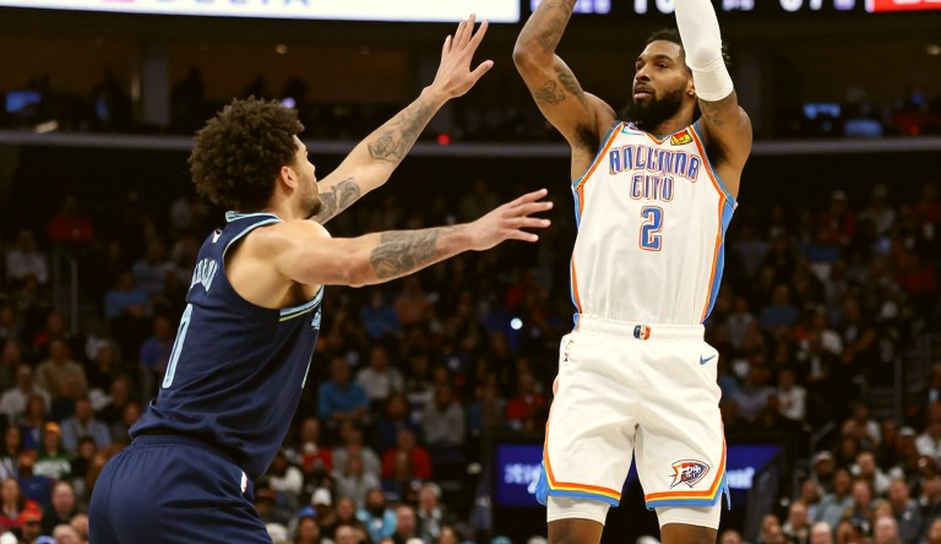
The Portland Trail Blazers enter the summer of 2026 with a number in their payroll that borders on the absurd: $11.8 million. That is the final-year salary on the four-year, $55 million contract Deni Avdija signed with the Washington Wizards before being moved to Oregon. At the moment he was named to his first All-Star team, it was the lowest salary of any player averaging more than 24 points per game in the 2026-26 NBA season. A 25-year-old, 6-foot-9 forward, he closed the season at 24.1 points, 6.8 rebounds and 6.5 assists. Portland holds an asset the open market values at many times what they are paying. And under the veteran extension mechanics of the current CBA, they are not permitted to pay that true value.
We need to place the case in its proper frame. Avdija arrived in Portland through a deal framed as a rebuild gamble, and within two seasons he moved from a promising 3-and-D wing into a genuine jumbo initiator: a player over 6-foot-8 running offense at a position most teams reserve for guards. The 6.5 assists per game at that size is not a decorative detail. It is a structural signal. A forward who can initiate offense off the dribble frees a team from dependence on a single point guard, and in the era of positionless switching, that is the archetype every front office is hunting.
The problem sits in the contract's structure. When Washington signed the four-year, $55 million deal, they front-loaded most of the money into the first two years to reduce later burden. For Washington at the time, that was sound. For Portland now, it is an accounting liability. Under the CBA's veteran extension rules, the first-year salary of an extension is capped at roughly 140 percent of the prior contract's final-year salary. Multiply 140 percent by $11.8 to $13.1 million, and the extension ceiling lands around $16.5 million to $18.3 million for year one. The maximum an eligible All-Star can command is typically 25 to 30 percent of the cap. The gap here is not a few million dollars. It is the gap between a role-player contract and a cornerstone contract.
One caveat on data quality before we proceed. The 24.1 points, 6.8 rebounds and 6.5 assists cited here are blended averages of the regular season and the playoffs. That blending obscures two important things: true shooting efficiency and playoff sample size. No TS%, eFG% or EPM figure has been supplied. This means any conclusion about Avdija's "superstar" status currently rests on volume, not efficiency. Based on my experience tracking these games, I always separate these two data sets before valuing any player, and I flag the omission because it shapes how the rest should be read.
Start with the number few notice. A 25-year-old, 6-foot-9 forward scoring 24.1 points and dishing 6.5 assists per game while earning $11.8 million in his final contract year. On the open market, the commensurate salary for a first-time All-Star jumbo initiator typically lands between $35 million and $45 million per year, depending on the cap and timing. The difference between the two numbers - roughly $23 million to $33 million per season - is the surplus value Portland is capturing. In the short term, that is a competitive advantage. In the medium term, it is a ticking bomb.
The mechanism behind it is simple and merciless. The 140 percent ceiling does not care how well Avdija plays. It only cares what he currently earns. Because the old contract was front-loaded, the denominator in the calculation is compressed to the floor. The result: a player worth $35 million or more is locked into a maximum offer of roughly $18 million. Portland can add a few percentage points through non-guaranteed bonuses, but those do not break the structure.
A contract has an escape clause, but cash flow does not. This is the core point most summer commentary misses. The player side does not need to get angry, does not need to issue ultimatums. The player side only needs to do the math: sign the extension at $18 million now, or decline, play out the two remaining cheap years, and reach unrestricted free agency after the 2027-28 season at age 27 or 28 - the exact peak of a skilled jumbo forward. If his efficiency holds or improves, his earnings could double. If injury strikes, he loses roughly $35 million. This is a bet whose odds tilt toward the player, which is why the possibility of Avdija rejecting an extension is not shocking at all.
Summer is a battlefield, and I am only the one counting bullets. And here, structurally, the bullets are on the other side of the table.
So what does Portland actually have? Three routes, and all three carry binding conditions.
The first is a renegotiation-and-extension. Under certain circumstances, a team can raise a player's current-year salary to a new figure, resetting the denominator for the extension. But this tool requires the team to be under the cap. For Portland, described as fighting to preserve long-term flexibility, this is nearly the opposite of reality. To create cap room, they must shed contracts, and shedding contracts in summer usually means losing assets or attaching first-round picks.
The second is an extension-and-trade. That is a legal instrument, but it transforms the problem from "keeping the player" into "selling the player," and the moment the trade window opens with a freshly signed contract, Avdija's market value gets re-priced in a different frame. No team wants to build around a star while publicly admitting it cannot keep him.
The third is to let him reach free agency and lean on Bird Rights. Bird Rights allow Portland to re-sign Avdija over the cap, meaning they can theoretically still pay him the maximum after 2027-28. But in the interim, they lose all leverage. Any team with cap space can apply pressure, and Portland would have to compete through organizational image rather than ability to pay. When an All-Star watches a front office struggle to properly reward him, he tends to remember it.
Data strings do not lie, but the people who arrange them do. How Portland arranges the numbers this summer will decide not just one contract, but the architecture of the franchise for the next five years.
One more word on the nature of the trap. This is not a story about a badly managed team. It is a story about a rule that inadvertently punishes teams holding underpaid players. The 140 percent provision exists to stop teams from circumventing the cap through serial extensions with unreasonable raises. But when a player makes a leap in status while on a cheap deal, the same rule becomes a chain. The CBA has no automatic adjustment for this scenario, only special tools with stringent conditions.
A player's value is printed on the court, but engraved on the payroll. And here is the problem: those two ledgers are recording two different numbers, a factor of two apart.
There is an assumption running beneath every summer commentary, and I believe it needs to be challenged: that Avdija is genuinely a cornerstone-tier superstar. The only basis for that status is the 24.1-point, 6.8-rebound, 6.5-assist line - and as noted above, that figure blends regular season and playoff averages. In data analysis, merging two samples without separating them is a flag requiring re-verification. It may simply be the source's presentational habit. But it may also be hiding something else: scoring efficiency under targeted playoff defense.
A jumbo initiator typically withstands defense better than a guard, because he can pass over double-teams. But that is an argument about the archetype, not about the specific individual. If Avdija's efficiency is merely average, the "superstar" label is narrative inflation, and the 140 percent trap becomes a far less severe problem than it is being presented as. I do not yet have the data to pass judgment. I merely note that both possibilities remain open.
I do not predict the future, I only read the ledger ahead of time. The current ledger says Portland holds a severely mispriced asset and is blocked by the rules themselves from correcting the price. But the ledger has not yet confirmed the asset is at the scale the headlines assign it.
What is worth watching is not whether Avdija signs an extension. What is worth watching is whether Portland can clear cap space before July to unlock the renegotiation tool. If they cannot, and if Avdija enters the 2027-28 season without a new deal, the story will no longer be about a CBA clause. It will be about a franchise that had its star in hand, knew exactly what he was worth, and let him walk anyway. The next question then: how many other All-Stars are sitting inside the same accounting trap, and how many of them will stay silent until it is too late?


Cầu thủ liên quan
Bài nổi bật
The 140% Extension Cap: When Portland's Payroll Cannot Pay Deni Avdija What He Is Worth2026-09-12
Cannot create article: Empty source data2026-09-09
BC Roma assembles NBA brains ahead of EuroCup: Colangelo, D'Antoni and the governance problem2026-09-09
Barcelona edges Andorra, Paris beats Zalgiris in pre-season friendlies2026-09-11
Bài đề xuất
Olympiakos confirms roster refresh: Bartzokas speaks bluntly on Laurentakis' departure2026-09-09
Euro 2026 Final: Spain 2-1 England — A New Dynasty and the Crack of the Perennial Runner-Up2026-09-10
The 140% Extension Cap: When Portland's Payroll Cannot Pay Deni Avdija What He Is Worth2026-09-12
Olympiakos refresh roster: Giannis Laurentakis leaves for AEK on a 2+1 deal2026-09-09
CSKA lost by 23 to Besiktas: A preseason friendly being overhyped by a scuffle2026-09-09
Release Clauses and Wage Bills: Where the Transfer Window Is Actually Decided2026-09-10
Bài đề xuất
Olympiakos confirms roster refresh: Bartzokas speaks bluntly on Laurentakis' departure2026-09-09
Olympiakos refresh roster: Giannis Laurentakis leaves for AEK on a 2+1 deal2026-09-09
BC Roma assembles NBA brains ahead of EuroCup: Colangelo, D'Antoni and the governance problem2026-09-09
Cannot create article: Empty source data2026-09-09
Fenerbahçe Wins the 2026-26 One Team Golden Award: An Elderly-Inclusive Project and the Limits of Data2026-09-10
Data Error: Cannot Create Article from Empty Analysis2026-09-11
Euro 2026 Final: Spain 2-1 England — A New Dynasty and the Crack of the Perennial Runner-Up2026-09-10