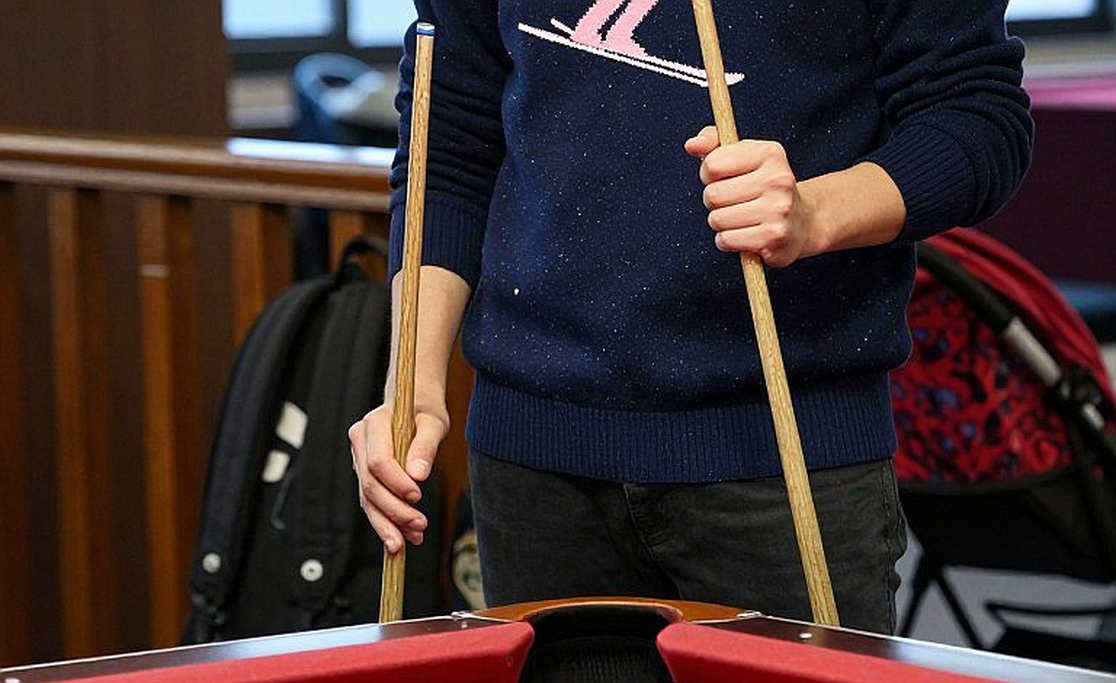
Kenny C. Crowned 'King of the Box' at Packy’s: A Local Pool Victory and Lessons from the Calcutta
Kenny C. won the 'King of the Box' pool tournament at Packy’s Sports Pub on August 30, 2026, defeating Brad H. twice in a double-elimination format. Total prize pool was $3,420 (21 entrants). Chris C. bought 100% of Kenny C. in the Calcutta side auction, indicating strong local confidence. No professional ranking impact.
There are moments in local sports where data never tells the whole story. On the evening of August 30, 2026, at Packy’s Sports Pub – a small bar somewhere in the United States – 21 amateur pool players entered the 'King of the Box' tournament with a total prize pool of $3,420, including $2,100 in entry fees and $1,320 from the Calcutta. But the number 21 doesn't reveal anything about skill; it only tells us this is a community event, where people play for love of the game and a bit of pocket-money excitement.
Context: Packy’s Sports Pub is not a professional billiards club. It's likely a familiar watering hole with a few worn pool tables, where middle-aged men gather after work. Yet here, a double-elimination tournament – a format common in American amateur pool – took place with no professional referees or official WPA rules, only unwritten house rules and pure competition. I have followed many such events in my 13 years working with sports data: they never appear on rankings, but they nurture grassroots love for pool.
The tournament's core was the rivalry between two standout players: Kenny C. (possibly Chavarria – though the report only lists initials) and Brad H. Kenny C. defeated Brad H. twice – once in the winners’ bracket and once in the overall final – to claim the 'King of the Box' title and $1,050 in main prize money. Brad H., after falling to the losers’ bracket, won five consecutive elimination matches to claw his way back. This number, though a minor statistic, hints at an important aspect: Brad H.’s mental resilience was above average for a bar tournament. But does that make him a 'formidable player'? No – because his opponents in that five-match streak were of unknown skill. I once wrote in a football analysis: 'Reading a player’s name before reading the formation is a fatal mistake.' Here, I say: reading a win streak without reading opponents’ skill level is meaningless.

The contrarian angle comes from the Calcutta story. In this tournament, a man named Chris C. bought 100% of Kenny C.’s share in the Calcutta auction, and also bought 50% for the 2nd through 4th place finishers. This suggests that Chris C. – possibly the bar owner or a seasoned local – rated Kenny C.’s chances highly from the start. Data from local tournaments shows that Calcutas often function as a form of side betting, but also as a market signal: the buyer places trust based on inside information (perhaps having seen Kenny C. play before). In American pool culture, the Calcutta is an integral part; it turns a 21-player event into a small trading floor. However, there is a blind spot: Chris C. did not buy shares in Brad H., the runner-up. This means either Chris C. believed Kenny C. would win outright, or Brad H. was unreliable in his eyes. The lack of data on other players’ skill prevents any firm conclusion, but it raises the question: does the Calcutta market reflect true strength? Or is it just a bet with asymmetric information?
From a professional perspective, this tournament holds zero value for world pool rankings. It is a grain of sand in the desert of amateur sports. Yet if you look at the bigger picture, it shows how bars across America keep pool alive. In a world dominated by esports and football, pool at taverns survives through events like this. I recall the 2026 World Cup, when Germany lost to South Korea because of an overly greedy attacking formation. Here, there is no formation at all – only single shots and instinct. But that lack of structure is its beauty: it is pure, untainted by complex tactics.
Takeaway: Kenny C. deserves the 'King of the Box' title for going undefeated throughout the event, but we cannot know if he could replicate this in a larger tournament. Brad H. showed resilience, but his opponents’ quality remains a mystery. As for Chris C., he may have made money from the Calcutta – or not, depending on how side-bets were split. The data I have is insufficient to offer a definitive judgment. This is where I fall back on my principle: 'I don’t remember the goal; I remember the defender’s position before the ball hit the net.' In pool, I would say: I don’t remember who won; I remember the shots that decided the match. And unfortunately, the original article doesn’t show me that.
So, the question for the reader is: does a tournament without detailed data deserve our analysis? Or does that very lack remind us that grassroots sport doesn’t need to be dissected – it only needs to be played, enjoyed, and remembered by those who were there?